UAPA

Lok Sabha had passed the Unlawful Activities (Prevention) Amendment Bill, 2019, that seeks to amend the Unlawful Activities (Prevention) Act, 1967, on July 24, the Rajya Sabha approved it by voice vote on Friday after rejecting an opposition-sponsored motion to send it to a select committee.

Unlawful Activities (Prevention) Act is an Indian law aimed at effective prevention of unlawful activities associations in India. Its main objective was to make powers available for dealing with activities directed against the integrity and sovereignty of India.

Union Home Minister Amit Shah said a four-level scrutiny has been provided in the amendment and no human rights will be violated. He said declaring individuals as terrorists is required as they float different organisations once an institution is banned. Individuals can be declared terrorists if they commit or participate in acts of terrorism, prepare or promote terror, he said. The amendment will expedite prosecution in terror cases, he said.

When it was first enacted, the UAPA exclusively dealt with offences related to unlawful activities. It empowered the government to declare certain associations ”unlawful”, and broadly defined “unlawful” to include acts intended to disrupt the country’s sovereignty, cause disaffection against India, among other things. The Act had some safeguards—the government had to specify grounds for its ban, set up a tribunal of a high court judge to determine sufficient cause for the ban, and publish the Tribunal judgment in the gazette.

The Unlawful Activities (Prevention) Amendment Bill was introduced recently. According to the statements of objects and reasons the bill amends the Unlawful Activities Act to make it more effective.
The bill amends the original act which now includes the definition of a person and a person shall include-
• An Individual
• A hindu undivided family
• A company
• A firm
• An association of person or a body of individual
• Every artificial judicial person
• Any agency, office or branch owned or controlled by any person falling within any sub clauses

The bill also made changes in ‘proceeds of terrorism ‘ and now it also includes the property intended to use for terrorism. It also gives a definition to the terms property. The bill has increased an association that can be declared Unlawful from two to five years.
It now has expanded the definition of ‘ terrorist act ‘ and now includes –
• Acts of demanding bombs, explosives, lethal weapons, inflammable substances etc.
• Acts that threaten economic security of India
• Acts that involve detention, abduction, threats to kill.
The bill also enlarges the punishment as of now raising the funds to commit a terrorist act or for the benefit of it or raising the funds legitimate or illegitimate all of them are punishable offence. It also includes the counterfeit Indian currency.
The bill has inserted new sections which includes offences by companies, societies or trusts. Every person at the time of offence are punishable with imprisonment for seven or more years and a fine between 5 to 10 crore rupees. The bill has also provided additional powers to courts in order to properly maintain and to ensure that the law is followed.
Article 370

Article 370 of the Indian constitution gave special status to Jammu and Kashmir – a state in India, located in the northern part of the Indian subcontinent, and a part of the larger region of Kashmir, which has been the subject of dispute between India, Pakistan, and China since 1947—allowing it to have a separate constitution,
The article was drafted in Part XXI of the Constitution: Temporary, Transitional and Special Provisions.The Constituent Assembly of Jammu and Kashmir, after its establishment, was empowered to recommend the articles of the Indian constitution that should be applied to the state or to abrogate the Article 370 altogether.

Article 370 acknowledges the special status of the state of Jammu and Kashmir in terms of autonomy and its ability to formulate laws for the state’s permanent residents.[note 6] In the 1954 Presidential order, among other things, the Fundamental Rights in the Indian Constitution were made applicable to Kashmir with exceptions. Later amendments, states Cottrell, modified the applicability of basic human rights in the Indian Constitution to permanent residents of Jammu and Kashmir.The state legislature further modified these, as well as added “preventive detention laws” that it exempted from human rights challenges for twenty-five years. Further, the state gave special privileges to the permanent residents in matters such as residence, property, education and government jobs, which were unavailable to others.Article 35A of the Indian constitution gave provision to state laws that defined their human rights in these matters from any constitutional challenges.

This article, along with Article 35A, defined that the Jammu and Kashmir state’s residents live under a separate set of laws, including those related to citizenship, ownership of property, and fundamental rights, as compared to resident of other Indian states. As a result of this provision, Indian citizens from other states could not purchase land or property in Jammu & Kashmir.

On 5 August 2019, President Ram Nath Kovind issued a constitutional order revoking the 1954 order, and making all the provisions of the Indian constitution applicable to Jammu and Kashmir. Following resolutions passed in both the houses of Parliament, he issued a further order on 6 August declaring all the clauses of Article 370 to be inoperative.

In addition, the Jammu and Kashmir Reorganisation Act was passed in both the houses of Parliament, enacting the division the state of Jammu and Kashmir into two union territories to be called Jammu and Kashmir and Ladakh.
This step of modi govt will definitely bring people together.

This step of Modi govt has added another golden fiber to the crown of Mother India.This historic day will remembered always!❤

Motor vehicle amendment

The motor vehicles act was passed in the year 1988 by Parliament of India and regulates almost all the aspects of road transport vehicles. It provides detailed provision on licensing of the drivers and conductors, registration of motor vehicles, the provision on controlling their permits, traffic regulation, related insurance, liabilities, and penalties.
This act majorly concentrates on innocent people who are on the road and can get affected by drivers of these motor vehicles. The motor vehicle act provides a provision for compensation for such helpless people. They are referred to as “Third Party” and the motor vehicle act revolves around providing safety to these third party people.
The motor vehicle act makes it mandatory for a driver to have a valid driving license and no motor vehicle can be driven without being registered under the motor vehicle act. This certificate of registration shall be valid for next fifteen years from date of registration and can be further renewed for next five years.
Motor vehicles amendment Bill 2019.

The bill contains provisions that will make Indian roads safer. The Bill was passed earlier in the Lok Sabha.
The Bill proposes huge increases in various penalties for traffic violations, protection to Good Samaritans, recall of defective vehicle parts by auto companies, holding builders accountable for poor quality of infrastructure and making vehicle owners criminally liable for violations committed by juvenile drivers.

1) It makes Aadhaar mandatory for getting a driving licence and vehicle registration.

2) For deaths in hit-and-run cases, the government will provide a compensation of Rs 2 lakh or more to the victim’s family. Currently, the amount is just Rs 25,000.
3) In traffic violations by juveniles, the guardians or owner of the vehicle would be held responsible unless they prove the offence was committed without their knowledge or they tried to prevent it. The registration of the motor vehicle in question will be cancelled. The juvenile will be tried under the Juvenile Justice Act.
4) The bill has provision for protection of Good Samaritans. Those who come forward to help accident victims will be protected from civil or criminal liability. It will be optional for them to disclose their identity to the police or medical personnel.
The minimum fine for drunk driving has been increased from Rs 2,000 to Rs 10,000.
6) The fine for rash driving has been increased from Rs 1,000 to Rs 5,000.
7) Driving without a licence will attract a minimum fine of Rs 5,000 as against Rs 500 at present.
8) The fine for over-speeding will go up from Rs 400 to Rs 1,000-2,000.
9) Not wearing seatbelt would attract a fine of Rs 1,000 as against Rs 100 at present.
10) Talking on a mobile phone while driving will attract a fine of Rs 5,000, up from Rs 1,000.
11) A Motor Vehicle Accident Fund will provide compulsory insurance cover to all road users in India for certain types of accidents.
12) It will be mandatory to alter vehicles to make them suitable for specially abled people.
13) Contractors, consultants and civic agencies will be accountable for faulty design, construction or poor maintenance of roads leading to accidents.
14) A time limit of six months has been specified for an application of compensation to the Claims Tribunal with regard to road accidents.
15) The Bill removes the cap on liability for third-party insurance. The 2016 Bill had capped the maximum liability at Rs 10 lakh in case of death and Rs 5 lakh in case of grievous injury.
16) The time limit for renewal of driving licence is increased from one month to one year before and after the expiry date.
17) The government can recall vehicles whose components or engine do not meet the required standards. Manufacturers can be fined up to Rs 500 crore in case of sub-standard components or engine.
The Bill also proposes changes to the process of vehicle registration with the aim to reduce corruption at the RTO; fining road contractors up to Rs 1 lakh for failing to comply with road standards; establishing new standard for vehicle fitness; and requirement of cab aggregators such as Ola and Uber to be issued licenses and compliance with the IT Act, 2000.
How well the proposals will be implemented and how much a difference will it make to the Indian road-scape remains unknown. The potential for change, however, is undeniably huge.

Teiple talaq

Triple talaq
, also known as talaq-e-biddat, instant divorce and talaq-e-mughallazah (irrevocable divorce), is a form of Islamic divorce which has been used by Muslims in India, especially adherents of Hanafi Sunni Islamic schools of jurisprudence.It allows any Muslim man to legally divorce his wife by stating the word talaq(the Arabic word for “divorce”) three times in oral, written, or more recently, electronic form.
The use and status of triple talaq in India has been a subject of controversy and debate. Those questioning the practice have raised issues of justice, gender equality, human rights and secularism. The debate has involved the Government of India and the Supreme Court of India, and is connected to the debate about a uniform civil code (Article 44) in India.On 22 August 2017, the Indian Supreme Court deemed instant triple talaq (talaq-e-biddah) unconstitutional. Three of the five judges in the panel concurred that the practice of triple talaq is unconstitutional. The remaining two declared the practice to be constitutional while simultaneously asking the government to ban the practice by enacting a law.
Introduced

Lok Sabha

Jun 21, 2019

Passed

Lok Sabha

Jul 25, 2019

Passed

Rajya Sabha

Jul 30, 2019

The Muslim Women (Protection of Rights on Marriage) Bill, 2019 was introduced in Lok Sabha by the Minister of Law and Justice, Mr. Ravi Shankar Prasad on June 21, 2019. It replaces an Ordinance promulgated on February 21, 2019.

The Bill makes all declaration of talaq, including in written or electronic form, to be void (i.e. not enforceable in law) and illegal. It defines talaq as talaq-e-biddat or any other similar form of talaq pronounced by a Muslim man resulting in instant and irrevocable divorce. Talaq-e-biddat refers to the practice under Muslim personal laws where pronouncement of the word ‘talaq’ thrice in one sitting by a Muslim man to his wife results in an instant and irrevocable divorce.

Offence and penalty: The Bill makes declaration of talaq a cognizable offence, attracting up to three years’ imprisonment with a fine. (A cognizable offence is one for which a police officer may arrest an accused person without warrant.) The offence will be cognizable only if information relating to the offence is given by: (i) the married woman (against whom talaq has been declared), or (ii) any person related to her by blood or marriage.

The Bill provides that the Magistrate may grant bail to the accused. The bail may be granted only after hearing the woman (against whom talaq has been pronounced), and if the Magistrate is satisfied that there are reasonable grounds for granting bail.

The offence may be compounded by the Magistrate upon the request of the woman (against whom talaq has been declared). Compounding refers to the procedure where the two sides agree to stop legal proceedings, and settle the dispute. The terms and conditions of the compounding of the offence will be determined by the Magistrate.

Allowance: A Muslim woman against whom talaq has been declared, is entitled to seek subsistence allowance from her husband for herself and for her dependent children. The amount of the allowance will be determined by the Magistrate.

Custody: A Muslim woman against whom such talaq has been declared, is entitled to seek custody of her minor children. The manner of custody will be determined by the Magistrate.

An accused is now entitled to seek bail from a magistrate, who is authorised to grant bail after hearing the aggrieved wife. However, this has not satisfied those opposing the Bill. It has been argued that while pronouncing instant triple talaq would no longer end the marriage, the Muslim men could be jailed and denied bail for uttering a word that holds no legal value.
The triple talaq bill also entitles a Muslim woman against whom talaq has been declared to seek subsistence allowance from her husband for herself and for her dependent children. Those opposing the Bill have argued that if instant triple talaq does not result in divorce in the wake of the Supreme Court order, how a Muslim man would be forced to provide subsistence to the woman, who is still his wife legally.

Right to information act

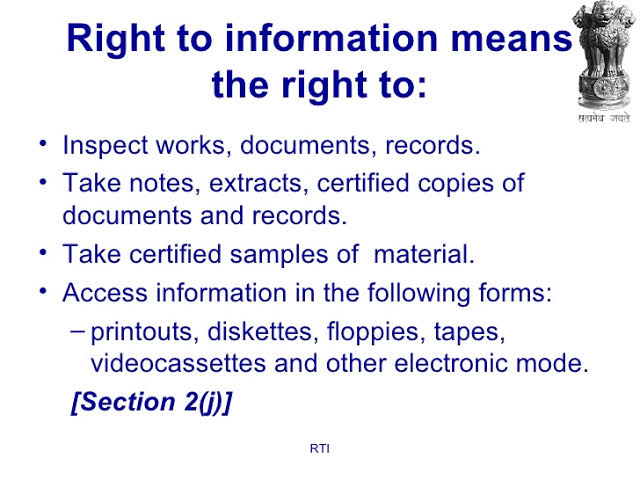
Right to Information (RTI) is act of the Parliament of India to provide for setting out the practical regime of the right to information for citizens and replaces the erstwhile freedom of information act 2002.Under the provisions of the Act, any citizen of India may request information from a “public authority” (a body of Government or “instrumentality of State”) which is required to reply expeditiously or within thirty days. The Act also requires every public authority to computerise their records for wide dissemination and to proactively certain categories of information so that the citizens need minimum recourse to request for information formally. It was introduced
Recently the government passed an amendment Bill in 2019.

The Right to Information (Amendment) Bill, 2019 was introduced in Lok Sabha by the Minister of State for Personnel, Public Grievances and Pensions, Mr. Jitendra Singh, on July 19, 2019. It seeks to amend the Right to Information Act, 2005. Key features of the Bill include:
Term of Information Commissioners: Under the Act, Chief Information Commissioner (CIC) and Information Commissioners (ICs) are appointed at the national and state level to implement the provisions of the Act. The Act states that the CIC and other ICs (appointed at the central and state level) will hold office for a term of five years. The Bill removes this provision and states that the central government will notify the term of office for the CIC and the ICs.
Determination of salary: The Act states that the salary of the CIC and ICs (at the central level) will be equivalent to the salary paid to the Chief Election Commissioner and Election Commissioners, respectively. Similarly, the salary of the CIC and ICs (at the state level) will be equivalent to the salary paid to the Election Commissioners and the Chief Secretary to the state government, respectively.
The Bill seeks to amend these provisions to state that the salaries, allowances, and other terms and conditions of service of the central and state CIC and ICs will be determined by the central government.
Deductions in salary: The Act states that at the time of the appointment of the CIC and ICs (at the central and state level), if they are receiving pension or any other retirement benefits for previous government service, their salaries will be reduced by an amount equal to the pension.
Previous government service includes service under: (i) the central government, (ii) state government, (iii) corporation established under a central or state law, and (iv) government company owned or controlled by the central or state government.
The Bill removes these provisions
Uncomfortable RTI pleas in background
This comes in the backdrop of a few orders of the information commission that were considered uncomfortable for the Modi government in recent times. Two examples can be gauged from PM Modi’s degree row and the status of non-performing assets in public sector banks.
In January 2017, acting on an RTI activist’s application, information commissioner Sridhar Acharyulu ordered the Delhi University to allow inspection of records of students who had passed BA course in 1978, the year in which Prime Minister Narendra Modi passed the examination.
Within the next couple of days, Sridhar Acharyulu was stripped of human resource development portfolio. Then Chief Information Commissioner RK Mathur took away HRD ministry from him. Interestingly, in a reshuffle within the central information commission on December 29, 2016, Acharyulu had retained HRD ministry in his portfolio.
In another incident from the previous Modi government’s tenure, the Reserve Bank of India had been directed on an RTI application, to provide details of the NPA in public sector banks and the details of big loan defaulters. The RBI had denied revealing information sought citing confidential nature of the same.
The matter reached the Supreme Court, which first in 2015, directed the RBI to make the information available and reiterated the order in April this year after the central bank failed to comply with the order.
What’s government’s defence?
The government has maintained that it has not tinkered with autonomy or independence of the central information commission. Minister of State in the Prime Minister’s Office Jitendra Singh while introducing the RTI Amendment Bill 2019 in the Lok Sabha on Monday said the Modi government is correcting the anomaly in the RTI law passed by the UPA government.
He said, “Probably, the then government of the day, in a hurry to pass the RTI Act, 2005, overlooked a lot of things. The Central Information Commissioner has been given the status of a Supreme Court judge but his judgments can be challenged in the high courts. How can that exist?”
“The RTI Act did not give the government rule-making powers. We are merely correcting these through the amendment,” Singh said.
Post-script
Interestingly, the central information commission has six information commissioners. Four posts of information commissioners are lying vacant with the Opposition citing the vacancies to accuse the Modi government of attempting to weaken the institution and check flow of information.
One curious connection before we conclude. The original RTI Act was passed after it was discussed and cleared by the Parliamentary Committee on Personnel, Public Grievances, Law and Justice. In the original bill, the salaries of the CIC and ICs were equivalent to secretaries and additional secretaries respectively.
But the parliamentary committee recommended increasing the same to the level of the chief election commissioner and other election commissioners for the CIC and the ICs respectively. The parliamentary committee that recommended the change included then BJP MPs Ram Nath Kovind (now the President), Ram Jethmalani (no longer with the BJP) and Balavant Apte.

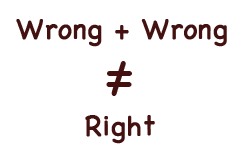
Two wrongs don’t make a right

There is this common saying that also happens to be known as the golden rule of living life ,’Treat people as you want to be treated’. A lot of people believe that if one follows this rule,his life would become easier. But , nowadays , many people think oppositely and believe in the saying ‘Treat how others treat you’Growing up as a child, I was constantly told this proverb and preached it by my parents. It was preached so much that I began to recite it when I was upset with something or someone. Seeking revenge is never the right answer.
An eye for an eye is never the right answer. For example, if we seek revenge on our parents for making us clean our room, then in the end, we will just get in even more trouble because our parents will yell at us.There come many circumstances in life that force the bad guy in you to come out. But once you lose temper, there remains no difference between you and the one you are fighting with. Remember that by adopting the similar path to to take revenge, you just annihilate your own self- respect and reputation l. You never know the reasons behind the actions of other people.Let’s look at an example to prove our point that ‘Two wrongs don’t make a right’

There were two children studying in the same coaching , they were friends but not good as with there nature you can say that they were just common or mutual friends. Let’s give them names A and B. One day A was roaming around the hostel ( to clear you all that they both live in hostel)and B was fighting with someone. A saw that , A ran fast to see what ia happening band them he saw that B was fighting with his best friend let’s say C. A got angry and drag B backwards and in return B punched at A’s face, after that A and C both of them knocked out B . And the matter was handled to the coaching , they thrown three of them out of the coaching. So , if someone is wrong you don’t have to be. Because A can sout out the matter what was going in between B and C.

Maybe it’s not in your hand to change things that happen but, it’s totally up to you how to deal with them. If you respond to bad things and bad attitude of people with positive attitude, there are chances that they turn out to be in your favour . MORAL OF THE BLOG ISLife is 10% what happens to you and 90% how you respond to it

When the world goes BLACK.

Even after being people with two eyes we still cannot figure out what is going around us, we still cannot see what is ‘actually’ going around us, unable to see the pain in people’s eyes, unable to listen to the sorrow in their voice but suddenly when we are not left with these two orbs so different from one other, we suddenly hear the grief, the love and every other emotion that we have considered abstract. That is when you make use of our senses putting all of them to use, ‘using’ them like the way they’re supposed to.

It does not take anything to say, but with experience nothing needs to be said it speaks for itself. I experienced it, for the most defining moments of my life, where everything was felt not just on the surface but felt to the bones. Being blindfolded seems like a petty thing, but being blindfolded and feeling that makes all the difference.

The activity that gave me this realisation was seemed just a play of two, with one person blindfolded and the other guiding the other through the surroundings, easy it seemed and not very impactful initially, but once the game started I realized what was actually happening, my guide was the only person I could trust, she was the one to help me through the darkness, while I experienced the unexpected.

A metaphor to my new journey to NLSIU, where all my senses were required equally, where I had to trust my mentors without doubting having faith in wherever they were leading me to. My teachers would become that pillar of strength who would help me build the empire of my dreams.

The blindfold was not just any other game but a lesson for the future and life.